Framework • Rhythm • Clarity • Presence

Golf Mental Game, Pre-Shot Routine, and Golf in Balance

Golf in Balance is a practical framework for playing and practicing golf with more clarity, better rhythm, steadier emotions, and a more dependable response under pressure.

This is not about chasing endless swing tips. It is about learning what actually helps a golfer hold together: intention, motion, acceptance, finish, and presence.

  • Clear the mind before the shot.
  • Move with freedom instead of steering.
  • Accept the result without emotional spillover.
  • Finish in structure and balance.
  • Return to the present shot, every time.

Golf in Balance helps golfers improve the mental game of golf with a simple pre-shot routine, steadier decision-making, better emotional control, and a more reliable response under pressure.

Use the menu above to explore the framework, the basic shot routine, the role of TrackMan, the Four Shields influence, and the wider Golf in Balance ecosystem.

👍 Facebook Page ▶️ YouTube Channel

The Golf in Balance Framework for the Golf Mental Game

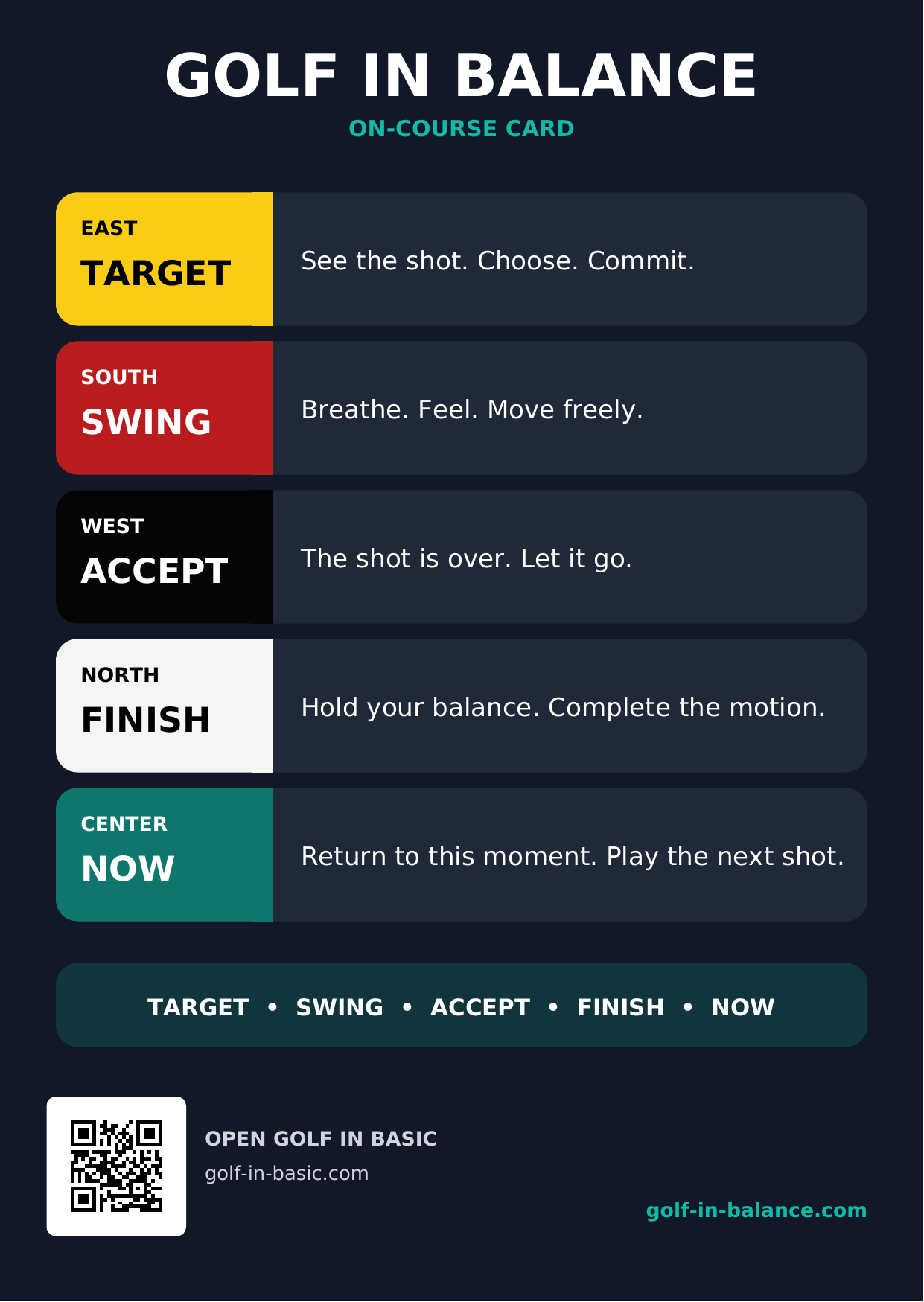
Golf in Balance gives the golfer a simple structure to return to when the game starts getting noisy. Instead of collecting more mechanical thoughts, the framework brings attention back to the few things that actually matter under pressure.

Target

Clear intention. Know the shot. See it. Commit to it.

Swing

Athletic motion. Let the body move. No steering, no grabbing.

Accept

No drama after impact. The shot is over. Learn, reset, move on.

Finish

Hold your structure and balance. End the motion with discipline.

Now

Come back to the present. No living in the last shot or the next hole.

This approach is especially useful for golfers who search for help with consistency, commitment, focus, rhythm, and how to stop overthinking on the course.

What this framework really gives you:

Clear intention. Athletic freedom. Emotional steadiness. Better structure. More presence. That is what tends to hold up when the round gets hard.

Golf in Balance Training Map

Most golfers don’t improve because they don’t know what to focus on. This map gives you a clear path based on where you are right now.

Beginner

Build structure and basic control.

  • Learn Target before every shot
  • Simple swing without overthinking
  • Hold your finish every time

Focus: Contact + Balance

Intermediate

Start playing real golf, not range golf.

  • Commit to every shot
  • Control tempo under pressure
  • Accept bad shots quickly

Focus: Decision + Rhythm

Advanced

Sharpen performance and scoring.

  • One clear thought per shot
  • No emotional reactions
  • Full trust in motion

Focus: Trust + Execution

The truth:

You don’t need more swing thoughts. You need clearer priorities.

The Basic Golf in Balance Pre-Shot Routine

The routine is simple on purpose. A golfer needs something usable on the course, not something so detailed that it collapses under pressure.

This routine works because it covers the whole shot cycle: before, during, after, and reset. It gives the golfer a way to stay organized without getting rigid.

On the course, this can be reduced to just five words: Target. Swing. Accept. Finish. Now.

Core Principles Behind Golf in Balance

1. Mindset leads

Golf is rarely ruined by one swing alone. More often it falls apart because the mind gets scattered, the body tightens, and decision-making gets cloudy.

2. Simplicity wins

The best on-course ideas are usually simple, physical, and repeatable. Too many thoughts kill rhythm.

3. Balance shows the truth

A held finish tells the truth. Balance exposes tension, rushing, and loss of structure.

4. Acceptance is a skill

Emotional reaction after the shot is one of the biggest score killers in golf. Acceptance protects the next shot.

5. The game mirrors the person

Golf tends to reveal patterns already present in life: impatience, fear, forcing, discipline, courage, steadiness.

6. Practice should build trust

Good practice is not just about strike quality. It should train clearer decisions, better tempo, and steadier recovery.

This approach is especially useful for golfers who search for help with consistency, commitment, focus, rhythm, and how to stop overthinking on the course.

The Four Shields influence

Golf in Balance is informed by the Four Shields of Human Nature: vision, feeling, reflection, discipline, and center. The framework translates those deeper human patterns into something a golfer can actually use on the range and on the course.

TrackMan & Launch Monitor Data — in Service of Clarity

In Golf in Balance, data matters only if it makes the golfer clearer and calmer. Numbers should support understanding, not create more mental clutter.

Why TrackMan Still Matters

But the Rule Stays the Same

The goal is not to turn a golfer into a machine. The goal is to give the player enough truth to make better decisions, then get back to swinging freely.

About Blain Bertrand

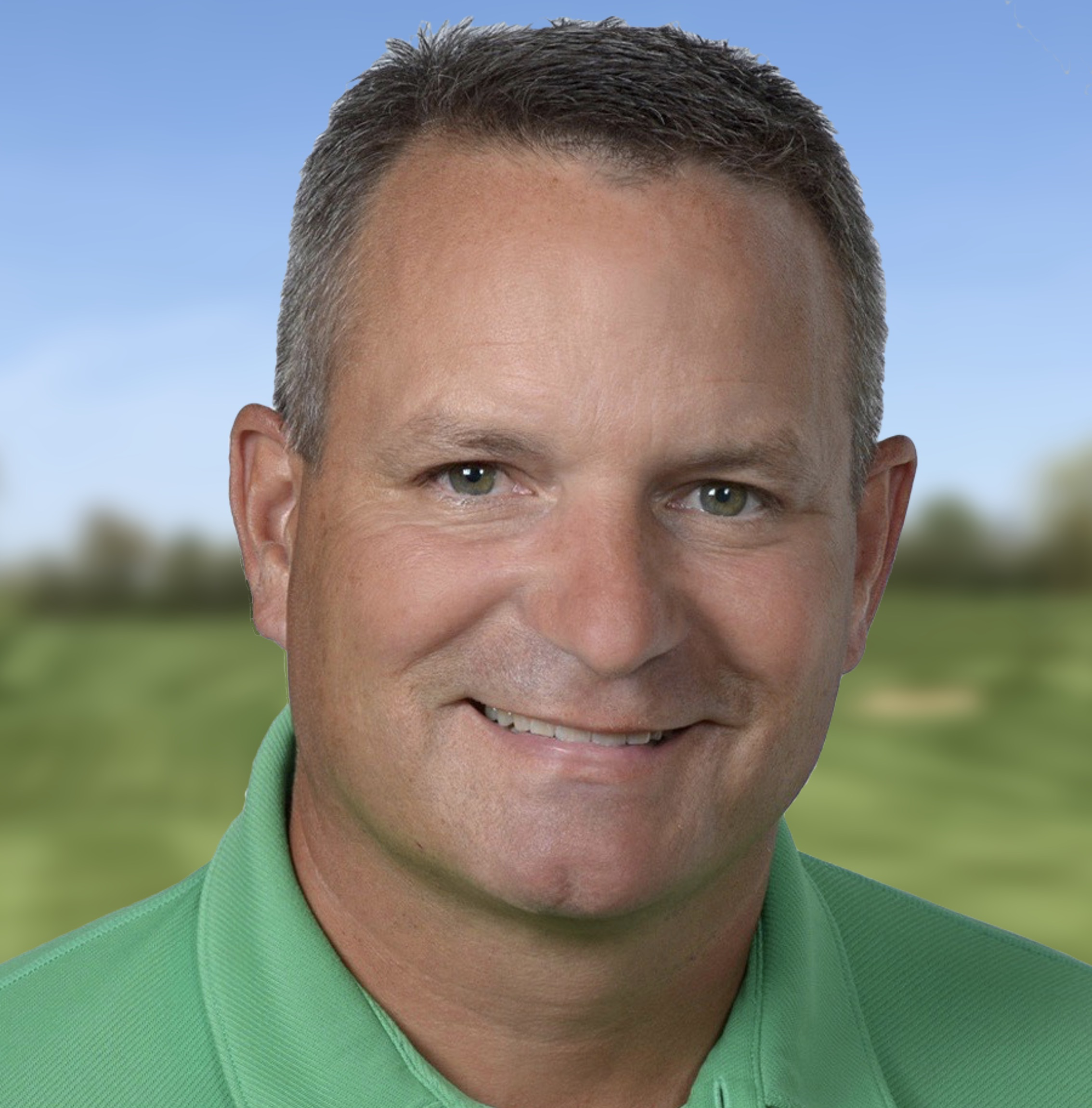
Blain Bertrand PGA Golf Professional and creator of Golf in Balance

My name is Blain Bertrand. I started golf at age six, served in the United States Army, and later built a long career in Germany as a PGA Professional and Head PGA Professional.

Over decades in the game, I saw something plain as day: golfers do not struggle only because of mechanics. They struggle because the game tests rhythm, trust, emotion, decision-making, and recovery.

Golf in Balance grew out of that truth. It is my effort to describe golf in a way that is practical, grounded, and useful under real pressure. Less noise. More center. Less forcing. More structure.

This website is here to explain that framework and connect it to the wider work around golf, veterans, the Four Shields, books, podcasting, and tools for steadier living.

Golf in Balance for Veterans

For many veterans, golf is more than recreation. It can become structure, rhythm, challenge, brotherhood, and a practical way to work with the nervous system without dressing it up in fancy language.

This is one reason Golf in Balance fits naturally alongside veteran community work. Golf can become a training ground for steadiness, honesty, and presence.

American Veterans in Europe

Veteran Golfers Association (VGA)

I’m actively involved with the Veteran Golfers Association in Germany. The VGA creates connection, structure, and healthy competition for veterans and military families through golf.

🌍 VGA Website 👍 VGA Germany on Facebook

Golf in Balance Podcast

Conversations about golf, rhythm, mental steadiness, life patterns, and the deeper realities that show up on the course.

The podcast explores what holds up under pressure: how a golfer thinks, reacts, resets, and returns to center.

Future episodes and seasons continue to expand the framework through stories, reflections, and practical examples.

🎙 Spotify Podcasts  Apple Podcasts 🎧 Amazon Podcasts ▶️ YouTube Podcasts

Apps

Tools connected to the same larger body of work around golf, the Four Shields, and steady living.

Books

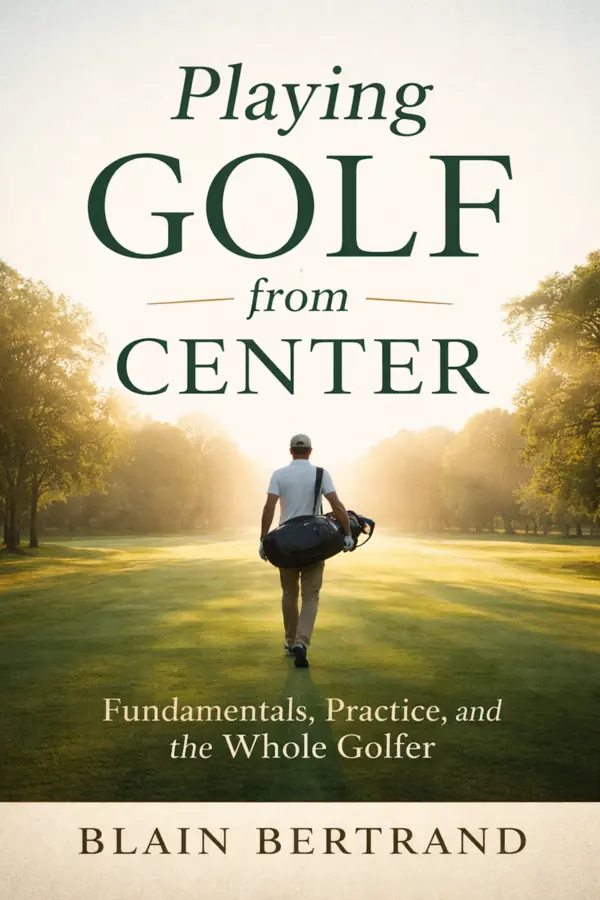
Golf in Balance sits inside a larger body of work on golf, human nature, veterans, and practical frameworks for steadier living.

  • Golf in Balance Series
    A complete collection of golf and life frameworks combining performance, structure, and human nature.
    📖 View on Amazon
  • The Four Shields Series
    A grounded approach to vision, body, feeling, reflection, discipline, and center.
    📖 View on Amazon
  • Golf FAQ

    What is Golf in Balance?

    Golf in Balance is a practical framework by Blain Bertrand that helps golfers build a steadier golf mental game through target, swing, accept, finish, and now.

    What is a golf pre-shot routine?

    A golf pre-shot routine is a repeatable process before each shot that helps you settle on a target, organize your mind, trust your motion, and commit fully.

    How do you stay calm in golf?

    You stay calmer in golf by keeping the routine simple, choosing a clear target, avoiding overthinking, accepting the result, and returning to the present shot quickly.

    The Golf Reset

    Bad round? Bad hole? Bad shot? This is where you come back to center.

    1. Stop

    Take one breath. Slow everything down.

    2. Accept

    The shot is over. No replay. No frustration.

    3. Refocus

    Pick a clear target for the next shot.

    4. Trust

    Swing freely. No steering.

    Remember:

    The next shot doesn’t care about the last one.